



By Kwara Reporters Editorial Desk
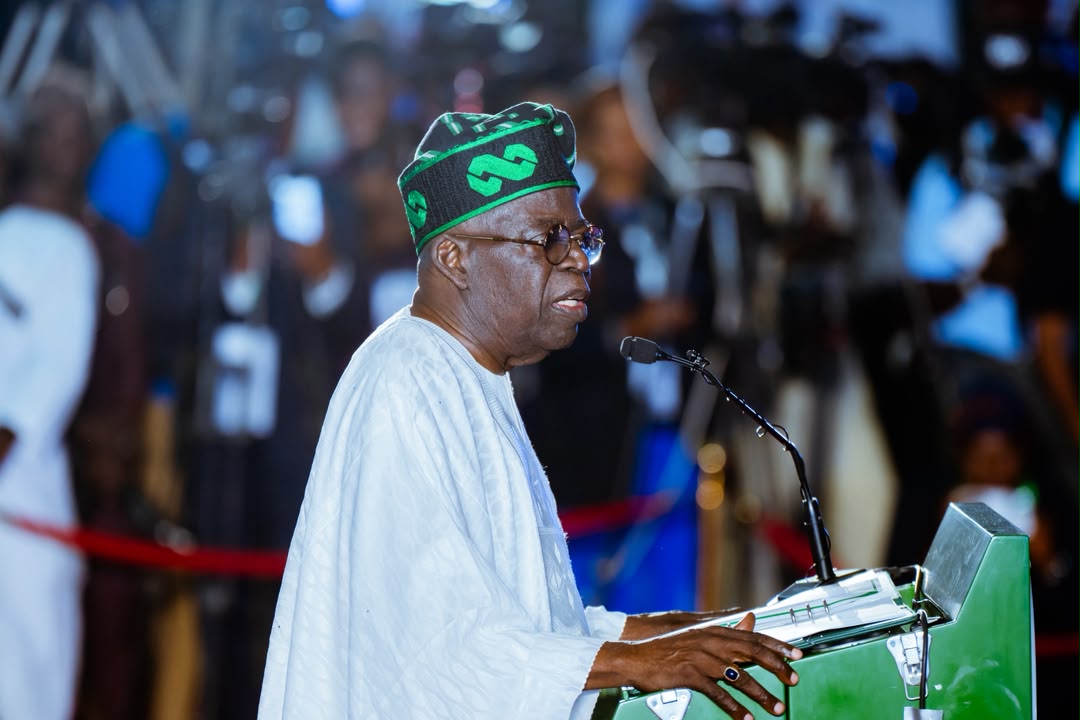
President Bola Ahmed Tinubu’s reported remark to Kwara State Governor AbdulRahman AbdulRazaq at the inauguration of the All Progressives Congress (APC) Presidential Campaign Council in Abuja has generated political interpretations, with supporters of the Governor presenting it as evidence that the President opposes the proposed rainbow coalition and expects APC to win every elective position in Kwara State.
However, a closer examination of the President’s actual words reveals a distinction between his reported electoral expectations and the broader political conclusions being drawn from them.

Tinubu reportedly told AbdulRazaq:
“I hope you must deliver Kwara intact.”
The President made the remark after acknowledging AbdulRazaq’s traditional title, Sardauna of Ilorin, and congratulating him on the honour.
Although the statement can reasonably be interpreted as an expression of the President’s expectation that APC should perform well in Kwara, it does not, on its own, establish that he has rejected the proposed rainbow coalition, ordered the disbandment of the G-15, or directed that opposition to the Governor be suppressed.
The distinction between what the President said and what political supporters infer from his words is central to understanding the controversy.
What Did Tinubu Actually Say?

The reported quotation is straightforward: the President expressed an expectation that AbdulRazaq would deliver Kwara intact.
The controversy arises from the interpretation attached to that statement.
Supporters of the Governor have argued that Tinubu’s words amount to a clear directive that APC must win all elective positions in Kwara and that anyone involved in political realignment against the Governor is acting against the President.
But several questions remain unanswered.
Did Tinubu specifically mention the G-15?
Did he refer to the rainbow coalition?
Did he declare that opposition to AbdulRazaq should be regarded as opposition to his presidency?
Did he announce that the Presidency would not recognise APC members who disagree with the Governor?
None of these additional instructions appears in the quotation provided.
Consequently, while the President’s remark may indicate his electoral expectations, attributing a specific directive against the rainbow coalition to him requires evidence beyond the quoted statement.
Political interpretations should not be presented as direct presidential instructions without supporting documentation.
Presidential Expectations Do Not Automatically End Political Realignment
Tinubu’s position as the APC’s presidential candidate gives him an obvious interest in the party’s electoral performance in Kwara State.
His expectation that the Governor should deliver the state is consistent with the broader objective of mobilising support for the party ahead of the 2027 general elections.
However, that expectation does not automatically resolve the disagreements within the Kwara APC or establish the President’s position on every proposed political alliance.
Political realignment, internal party disagreements and support for a presidential candidate are separate matters.
A politician could support Tinubu’s presidential ambition while disagreeing with AbdulRazaq over the distribution of political opportunities, party leadership or the governorship contest.
Whether such an arrangement is politically viable is a separate question from whether it amounts to opposition to the President.
Therefore, the assertion that anyone who opposes AbdulRazaq is automatically opposing Tinubu remains an interpretation that requires independent evidence.
The President’s name should not be used to settle political disputes on his behalf without establishing his actual position.
Does AbdulRazaq’s Campaign Appointment Prove Exclusive Presidential Support?
Another argument advanced by supporters of the Governor is that AbdulRazaq’s appointment to a senior position in the presidential campaign structure demonstrates that Tinubu will support him against every political opponent in Kwara.
The appointment confirms that AbdulRazaq has an important role in the campaign.
However, a campaign appointment does not, by itself, establish that the President has endorsed every political decision made by the Governor or rejected every alternative political arrangement in the state.
To establish that Tinubu has issued a specific directive against the G-15 or the rainbow coalition, those making the claim should produce an official statement, a verifiable directive or other credible evidence confirming that position.
Without such evidence, the claim remains a political interpretation rather than an established fact.
The 2023 Election Results Do Not Guarantee the Same Outcome in 2027
The argument that APC won all elective positions in Kwara in 2023 is relevant to understanding the party’s previous electoral performance.
However, historical results cannot independently establish the outcome of a future election.
The political environment can change, and electoral outcomes depend on voter preferences, candidates, party organisation, public confidence and other factors.
The 2023 results therefore cannot be treated as proof that APC is automatically entitled to repeat the same performance in 2027.
If the party believes it retains broad support across Kwara, the appropriate test will be the electorate’s response at the ballot box.
The President’s reported statement expresses an expectation, not a certified result for an election that has yet to take place.
Rainbow Coalition: What Is the Evidence of Presidential Opposition?
The claim that Tinubu’s remark amounts to a rejection of the rainbow coalition raises a separate question: is there verifiable evidence that the President has expressly opposed the proposed arrangement?
The quotation itself does not answer that question.
To establish the President’s position, it would be necessary to examine any official statements, documented meetings, directives or other verifiable communications specifically addressing the coalition.
The absence of a particular group from a campaign council, where established, may be relevant to understanding the composition of that council. It does not automatically prove that the President has rejected every possible political arrangement involving its members.
Similarly, claims that political figures made unsuccessful attempts to meet the President or sought his endorsement should be independently verified before being presented as established facts.
Where information comes from unnamed sources, responsible reporting requires clear attribution and appropriate caution.
Separating Facts From Political Claims
For clarity, the controversy can be divided into three categories.
1. The reported statement
Tinubu reportedly told AbdulRazaq: “I hope you must deliver Kwara intact.”
2. A reasonable political interpretation
The remark can be understood as an expression of the President’s expectation that the APC campaign should perform well in Kwara State.
3. Claims requiring additional evidence
Assertions that Tinubu has ordered the disbandment of the G-15, rejected the rainbow coalition, promised unconditional support for AbdulRazaq against every opponent, or declared opposition to the Governor equivalent to opposition to the President require evidence beyond the quoted remark.
These distinctions matter because political commentary should not be confused with official presidential policy.
Conclusion: Tinubu’s Words Should Be Interpreted in Context
President Bola Ahmed Tinubu’s reported remark to Governor AbdulRahman AbdulRazaq has provided material for political debate in Kwara State ahead of the 2027 general elections.
However, the statement should be examined in its proper context rather than treated as conclusive evidence of the President’s position on every political dispute within the state.
The President’s expectation that APC should deliver Kwara does not, by itself, establish that he has rejected the rainbow coalition or ordered opposition to AbdulRazaq to be suppressed.
Those making such claims should provide verifiable evidence of the specific instructions they attribute to him.
At the same time, the quotation does not prove that Tinubu supports the rainbow coalition. His position on that arrangement must be established through direct statements or other reliable evidence, rather than assumptions.
Ultimately, the President’s electoral expectations, the Governor’s political interests and the choices of individual politicians should not automatically be treated as one and the same thing.
As Kwara’s political landscape evolves ahead of 2027, public debate will be better served by accurate quotations, verifiable evidence and a clear distinction between established facts and partisan interpretations.
–Kwara Reporters Editorial Desk