

The community initiative questions how rehabilitation funds, government intervention and contractor mobilisation have failed to restore water supply to four Kwara LGAs, calling for an independent investigation into the project’s execution.
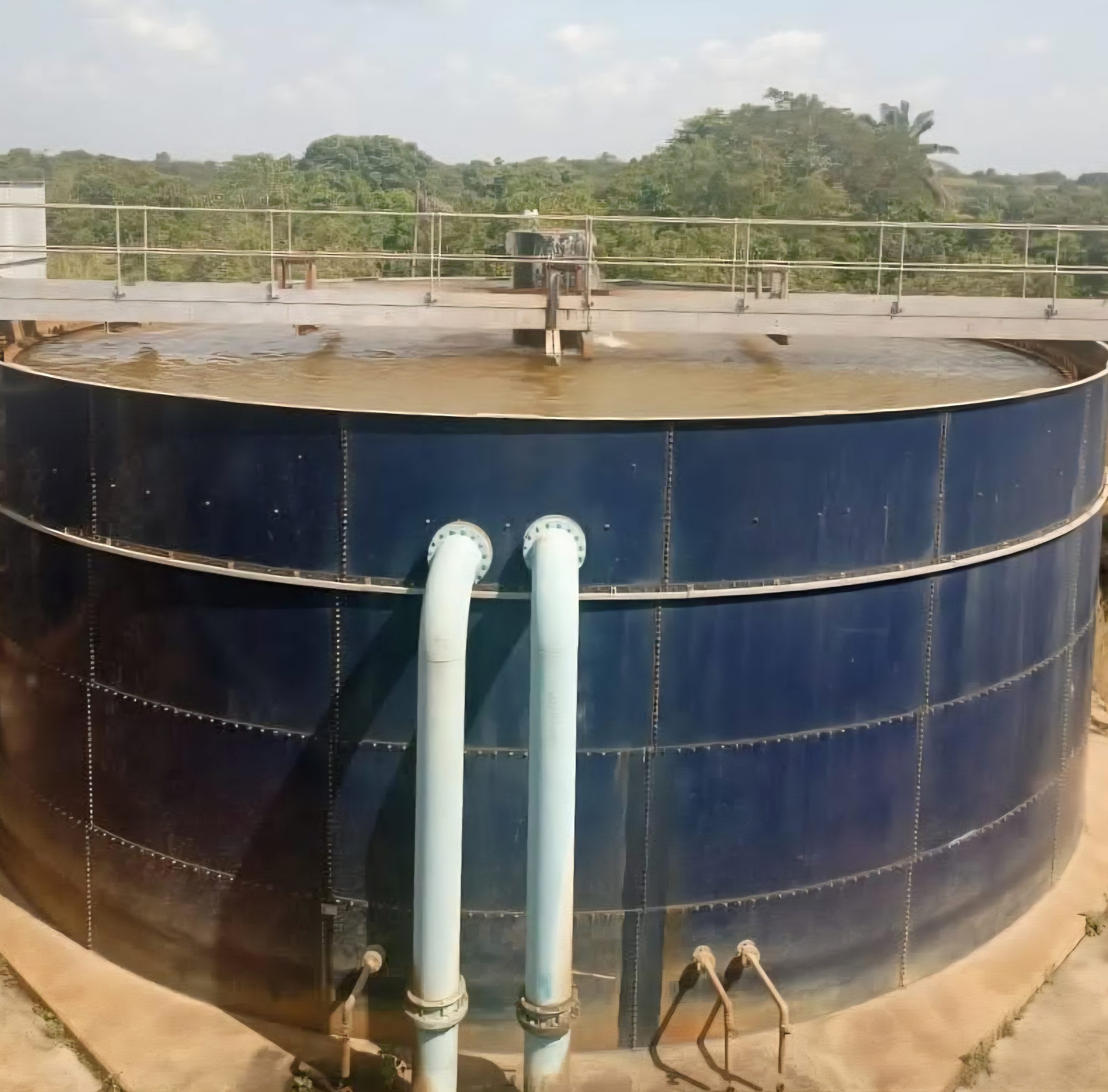
Nearly two years after rehabilitation efforts reportedly began at Oyun Water Works, residents of Offa, Oyun, Ifelodun and Irepodun Local Government Areas are still waiting for potable water, raising fresh questions about the implementation of a government-backed project and the management of public resources.
The Ibolo Community Welfare Initiative (ICWI) has now called on the Kwara State Governor to establish an independent investigative committee to determine why both the multimillion-naira Biwater section and the old Oyun Water Works remain non-operational despite reported government funding, rehabilitation approval and the mobilisation of a contractor to the site.

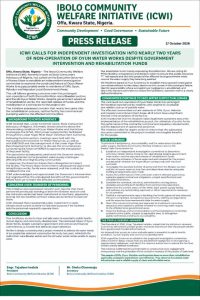
In a statement issued on Saturday, October 17, 2026, the initiative expressed concern that substantial government intervention had yet to translate into functional water infrastructure for the affected communities.
The development raises a pressing question: If rehabilitation funds were released and a contractor mobilised, why are the two water facilities still not supplying water to the people they were meant to serve?
ICWI insists that the public deserves answers.
Government Intervention, But Where Is the Water?

The controversy follows earlier advocacy by the organisation, formerly known as Ibolo Consumers Advocacy of Nigeria, over the deteriorating condition of Oyun Water Works and the failure to energise a 1MVA, 33kV power supply facility facilitated through the Lower Niger River Basin Development Authority.
According to the initiative, its advocacy prompted engagements with the Kwara State Commissioner for Water Resources, ENETSUD and the management of the Lower Niger River Basin Development Authority.
The discussions reportedly focused on issues surrounding the failure of the Nigerian Electricity Management Services Agency (NEMSA) to approve the energisation of the power facility.
ICWI subsequently petitioned the governor over the persistent water supply challenges affecting Offa and neighbouring communities.
Following the petition, the governor reportedly dispatched a delegation to inspect the facility, after which the state government approved rehabilitation works, released funds and saw the contractor mobilise to the project site.
However, ICWI says neither the Biwater section nor the old water works has resumed pumping water.
The initiative acknowledged the governor’s intervention but questioned why the anticipated benefits remained unrealised.
For residents who continue to struggle to access clean water, the central issue is no longer simply whether government approved rehabilitation. It is whether the intervention has delivered the promised public benefit.
Personnel Transfers Raise Fresh Questions
Beyond the reported delays in restoring operations, ICWI has raised concerns over the reported transfer of most personnel previously working at both facilities to Asa Dam.
The organisation said the transfers appeared to have left the two water works without adequate personnel to operate them.
If confirmed, the development could raise questions about whether staffing requirements were adequately considered during the rehabilitation process.
The initiative wants investigators to establish why the personnel were transferred, who authorised the decisions and whether replacement workers or alternative operational arrangements were provided.
It also wants the government to clarify whether the facilities were considered operationally ready before rehabilitation funds were committed.
However, the circumstances surrounding the reported transfers, the current staffing position and their precise effect on the facilities’ operational status have yet to be independently established.
ICWI said these issues should be investigated rather than left to speculation.
Public Funds Under Scrutiny
The continued non-operation of the two facilities has also brought the execution of the rehabilitation project under scrutiny.
ICWI is demanding an examination of the funds approved and released for the project, the actual work carried out, the contractor’s performance and the responsibilities of the relevant supervising agencies.
The initiative has not established that funds were misappropriated or that any individual or organisation committed wrongdoing. Its position is that the prolonged failure of the facilities warrants an independent examination of the project’s financial, technical and administrative records.
Among the questions requiring answers are whether the rehabilitation works were completed according to specification, whether outstanding electrical or regulatory requirements remain unresolved, and whether the facilities can operate with the personnel currently available.
The organisation wants the state government to publish a comprehensive report detailing the project’s funding, work completed, outstanding requirements and an expected date for the resumption of water supply.
Without transparent answers, questions about the project’s cost, progress and accountability are likely to persist.
Four Local Government Areas Bear the Consequences
The communities affected by the continued failure of Oyun Water Works include residents of Offa, Oyun, Ifelodun and Irepodun Local Government Areas.
For these communities, access to potable water is not merely an infrastructure issue. It is directly connected to public health, sanitation, household expenses and general living conditions.
ICWI warned that public investment in water infrastructure would fail to achieve its purpose if completed or rehabilitated facilities could not be operated effectively.
The organisation argued that residents should not continue to bear the consequences of administrative, technical or operational problems that the relevant authorities are expected to resolve.
It therefore urged the government to establish a definite timeline for restoring water supply and ensure that the relevant ministries and agencies implement corrective measures.
ICWI’s Nine Demands to the Kwara Government
To address the situation, the organisation has called for nine major actions:
1. An independent investigation into why both sections of Oyun Water Works remain non-operational despite government intervention and the reported release of rehabilitation funds.
2. A financial audit of the funds approved and released for the project, including a comparison of expenditure against the work executed.
3. A probe into personnel transfers from the Biwater section and old water works to Asa Dam, including whether adequate staffing arrangements were made.
4. An assessment of the contractor’s performance against contractual obligations, project specifications and agreed timelines.
5. A technical and administrative review to identify the electrical, regulatory and operational obstacles preventing the facilities from functioning.
6. Clarification on the 1MVA, 33kV power supply facility, including its current status and any outstanding approvals or requirements.
7. Publication of a comprehensive project report detailing the funds approved and released, completed works, outstanding obligations and staffing arrangements.
8. A definite timetable for restoring water supply to the affected local government areas.
9. Public disclosure of the investigation’s findings and recommendations, subject to applicable laws, to strengthen transparency and accountability.
The demands place responsibility on the state government to explain the project’s current status and demonstrate how the intervention will translate into reliable water supply.
‘The People Deserve Answers’
The President of ICWI, Engr. Tajudeen Iwalola, said the organisation’s position was motivated by the need to protect public resources and ensure that government-funded infrastructure served its intended purpose.
He stressed that access to clean and safe water was essential to public health, human dignity, sanitation and community development.
According to the organisation, the continued non-operation of both sections of Oyun Water Works, despite the reported government intervention, requires an explanation backed by verifiable facts and a practical plan for restoring operations.
ICWI also clarified that its demand was not intended to undermine the governor’s intervention but to ensure that any administrative, technical or operational failures were identified and addressed.
The organisation urged the governor to establish the proposed investigative committee without further delay and ensure that any negligence or wrongdoing established by the investigation was appropriately addressed.
It further called for a clear deadline for restoring the facilities and making potable water available to the affected communities.
The Questions the Government Must Answer
At the centre of the controversy are several questions that remain unanswered in the information provided by ICWI:
How much money was approved and actually released for the rehabilitation of Oyun Water Works?
What specific rehabilitation work has been completed, and what remains outstanding?
Why have neither the Biwater section nor the old water works resumed pumping water?
What is the current status of the 1MVA, 33kV electricity supply facility?
Were the reported personnel transfers made, and what operational arrangements followed?
Who is responsible for resolving any outstanding technical, contractual or administrative issues?
When can residents of Offa, Oyun, Ifelodun and Irepodun realistically expect water supply to resume?
The answers could help establish whether the delay stems from technical challenges, regulatory requirements, staffing decisions, contractual issues or other administrative factors.
Until these questions are addressed, residents may continue to wait for the benefits of an intervention that was expected to restore an essential public service.
For ICWI, the demand is straightforward: government intervention must produce measurable results, and public investment must be accompanied by transparency and accountability.
The organisation reaffirmed its commitment to civic engagement and the protection of the collective interests of Ibolo land.
Nearly two years into the reported rehabilitation process, the people of Offa, Oyun, Ifelodun and Irepodun are demanding more than assurances. They want to know what has happened to the project, why water is still not flowing and when the facilities will finally serve their communities.
The Kwara State Government’s response to these concerns could prove critical to restoring public confidence in the Oyun Water Works project.